
SESSIONS & RESOURCES
Supporting the Whole Child
Connecting Brain Health, Systems, and Practice
About:
This ECHO-like series is designed for pediatric providers, educators, care coordinators, mental health professionals, and all Telehealth ROCKS’ partners who want to deepen their understanding of how brain health, family systems, and everyday practice intersect—and what that means for the children and families they serve. Each session is grounded in the Whole School, Whole Community, Whole Child (WSCC) framework, recognizing that children thrive when the systems around them work together.
By ECHO-like, we mean an interactive, all-teach-all-learn, practice-informed learning model that emphasizes:
- Brief expert framing
- Applied discussion and shared learning
- Practical strategies participants can use in real-world settings
Series Details:
- Sessions occur twice monthly:
- Second Wednesday of each month @ 9:00am CT
- Last Thursday of each month @ 12:00pm CT
Free to attend | Online via Zoom | Certificates of Attendance provided
Want to be a Speaker/Presenter for this Series?
We are inviting expert speakers and case presenters to share their interest and availability in presenting one or more sessions in this series. Please take a few minutes to complete the form below. A Telehealth ROCKS team member will follow up with additional details and next steps.
(Speaker stipends provided.)
Past Sessions - 2026
-
Session 1 - A WSCC Framework for Practice and Collaboration
About the Session:
Co-facilitated by a child psychologist and an education specialist, this session will explore how brain health, environment, and everyday practice intersect across disciplines. Participants will also learn what to expect from the series, including our interactive, case-based approach and opportunities to engage with peers across sectors. This session will focus on key WSCC areas, including Social and Emotional Climate, Counseling/Psychological Services, and Family Engagement.
Presenters:
- Eve-Lynn Nelson, Child Psychologist and Executive Director of Telehealth ROCKS
- Laurie Krom, Education Specialist and Training & Quality Improvement Director of Telehealth ROCKS
Session Materials:
Learning Objectives:
- Describe the WSCC (Whole School, Whole Community, Whole Child) framework and its relevance to supporting children’s health and development
- Identify how multiple systems, including education, healthcare, families, and community organizations, contribute to whole-child outcomes
- Explain how an interdisciplinary, case-based learning approach supports real-world application across settings
- Describe the structure of the ECHO series and how to actively participate in ongoing sessions including case discussions and peer learning
Resources:
- WSCC Learning Modules (SOPHE) – includes handouts and practical tools
- CDC WSCC Overview Video – youth-focused, helpful intro/refresher
- CDC Strategies for Applying the WSCC Model
This training was supported by the Health Resources and Services Administration (HRSA) through the Telehealth Technology‐Enabled Learning Program (Grant #U3I43512) of the U.S. Department of Health and Human Services (HHS) as part of an award totaling $475,000 with 100% of project costs financed with federal funds. The contents are those of the author(s) and do not necessarily represent the official views of, nor an endorsement by, HRSA, HHS, or the U.S. Government.
-
Session 2 - Supporting Youth Substance Use Prevention and Early Interventions in Schools and Communities
About the Session:
How can schools and communities identify and respond to early signs of substance use among youth? In this interactive session, participants will explore practical approaches to early identification and intervention, with a focus on real-world implementation in school and community settings. Through a case-based discussion, participants will engage in interdisciplinary problem-solving and learn strategies they can apply in their own work. This session will focus on key WSCC areas, including Social and Emotional Climate and Counseling/Psychological Services.
Presenters:
- Carolyn J. Swenson, MSPH, MSN, RN, Independent Consultant
- Hildie Cohen, MEd, MA, Senior Research Director, NORC at the University of Chicago
Session Materials:
Learning Objectives:
- Describe approaches to early identification and response to youth substance use in school and community settings
- Identify practical strategies for implementing structured screening, brief intervention, and referral to treatment (SBIRT) approaches across systems
- Apply interdisciplinary problem-solving to real-world challenges related to youth substance use prevention and early intervention
Resources:
- CRAFFT Website
- CRAFFT Screener
- Adolescent SBIRT Pocket Card
- BNI Algorithm
- Adolescent SBIRT On-Demand Training(available at no cost)
- Other SBIRT Tools and Resources
This training was supported by the Health Resources and Services Administration (HRSA) through the Telehealth Technology‐Enabled Learning Program (Grant #U3I43512) of the U.S. Department of Health and Human Services (HHS) as part of an award totaling $475,000 with 100% of project costs financed with federal funds. The contents are those of the author(s) and do not necessarily represent the official views of, nor an endorsement by, HRSA, HHS, or the U.S. Government.
-
Session 3 - Catch it Early: Preventing and Addressing Youth Gambling Behaviors
About the Session:
Youth gambling is an often overlooked risk behavior with real implications for health and well-being. In this interactive session, participants will learn how to recognize early signs of gambling-related concerns and explore prevention and early intervention strategies through case-based discussion that shows how these approaches can be applied in school and community settings.
Presenters:
Ken C. Winters, PhD, Senior Scientist, Oregon Research Institute
Jerry Bauerkemper, BS, CCGC, Health Consultant, Iowa Gamblers Assistance Program
Session Materials:
Learning Objectives:
- Recognize early signs and risk factors associated with youth gambling behaviors
- Describe practical strategies for initiating conversations with youth about gambling and related risks
- Apply interdisciplinary approaches to the implementation of prevention and early intervention for youth gambling in school and community settings
Resources:
Youth Gambling Resources:
- Kansas Coalition on Problem Gambling
- National Problem Gambling Helpline (1-800-MY-RESET)
- National Council on Problem Gambling
- International Center on Responsible Gaming
- International Center for Youth Gambling
Motivational Interviewing Resources:
- HealtheKnowledge MI course (UCLA)
- MI Tips for Health Professionals (The National Council for Wellbeing)
- Webinar: Brief Intervention for Adolescents Part I: BNI Using MI Strategies (NORC)
- MI Guidance Documents
Other Resources:
This training was supported by the Health Resources and Services Administration (HRSA) through the Telehealth Technology‐Enabled Learning Program (Grant #U3I43512) of the U.S. Department of Health and Human Services (HHS) as part of an award totaling $475,000 with 100% of project costs financed with federal funds. The contents are those of the author(s) and do not necessarily represent the official views of, nor an endorsement by, HRSA, HHS, or the U.S. Government.
-
Session 4 - What Happens Next? Supporting Kids After Trauma from Initial Report to Care
About the Session:
Supporting youth after trauma (e.g., maltreatment, exposure to violence or other crimes) means looking beyond a single moment or system — it means seeing and supporting the whole child and their family over time. In this session, participants will explore what the processes and procedures look like for youth and their families who are referred to a child advocacy center as part of initial investigations of trauma exposure like child abuse or violence in the home. Participants will also learn about how the characteristics and experiences of the youth, their family, and the community may impact a youth’s mental health challenges in the initial days and weeks after traumatic events.
Presenters:
Austen McGuire, PhD, Licensed Psychologist & Assistant Professor, University of Kansas Medical Center
Jerry Bauerkemper, BS, CCGC, Health Consultant, Iowa Gamblers Assistance Program
Session Materials:
Learning Objectives:
- Describe the prevalence and common types of trauma youth experience and what types of trauma are served by professionals at Child Advocacy Centers
- Explain the types of services youth and families receive at Child Advocacy Centers for exposure to trauma
- Identify primary risk and protective factors associated with the development of posttraumatic stress disorder and other mental health challenges among youth who experience trauma
Resources:
- The National Child Traumatic Stress Network
- The Dougy Center
- The National Mass Violence Center
- The National Alliance for Children's Grief
- Child Welfare Information Gateway
- Effective Child Therapy
- Child Advocacy Center Model
- Children's Advocacy Centers of Kansas Map
This training was supported by the Health Resources and Services Administration (HRSA) through the Telehealth Technology‐Enabled Learning Program (Grant #U3I43512) of the U.S. Department of Health and Human Services (HHS) as part of an award totaling $475,000 with 100% of project costs financed with federal funds. The contents are those of the author(s) and do not necessarily represent the official views of, nor an endorsement by, HRSA, HHS, or the U.S. Government.
-
Session 5 - Growing Healthy Habits: Youth Nutrition and School Food Systems
About the Session:
This session focuses on nutrition and its role in supporting healthy routines and overall well-being, with an emphasis on practical strategies families can use during the summer months when routines often shift. It will also highlight how school-based nutrition programs can incorporate fresh, locally grown foods into school meals and broader wellness efforts, including the use of school gardens to support access to nutritious options.
Presenters:
Bethany Frazier, MS, RDN, LD, Registered Dietitian, The Kansas City Dietitian Collective
Casey Worden, BSHS, Director of Child Nutrition Services, Coffeyville School District (USD 445)
Session Materials:
Learning Objectives:
- Identify practical approaches for supporting healthy eating habits in children and youth
- Identify practical strategies for encouraging healthy eating habits and helping children become more adventurous eaters
- Explain how schools and Child Nutrition Services can improve access to nutritious foods and nutrition education through innovative programs and community partnerships
- Recognize how nutrition, education, and food systems can work together to support a whole-child approach to student wellness
Resources:
- Ellyn Satter Institute - Picky Eating Article
- What is BROG?
- Action for Healthy Kids
- USDA Farm to School Program
- National Farm to School Network
- KSDE Child Nutrition & Wellness: Farm to School Resources
- No Kid Hungry
This training was supported by the Health Resources and Services Administration (HRSA) through the Telehealth Technology‐Enabled Learning Program (Grant #U3I43512) of the U.S. Department of Health and Human Services (HHS) as part of an award totaling $475,000 with 100% of project costs financed with federal funds. The contents are those of the author(s) and do not necessarily represent the official views of, nor an endorsement by, HRSA, HHS, or the U.S. Government.
-
Session 6 - Navigating Pediatric Medical Complexity in School-Based Settings
About the Session:
This session explores the care of children with medical complexity across healthcare, school, and home settings. Participants will discuss challenges in care coordination and communication between systems.The session will highlight strategies for improving interdisciplinary collaboration to better support children with medical complexity in both school and clinical environments.
Presenters:
Timothy Ryan Smith, M.D., FAAP, Associate Professor Pediatrics, Founder & Director of Pillars Medical Complexity Clinic, University of Kansas Medical Center
Deb Cook, RN, AE-C, Certified Asthma Educator, Retired School Nurse
Session Materials:
Learning Objectives:
- Identify the multidisciplinary team involved in the care of children with medical complexity (CMC)
- Become familiar with the clinical and administrative resources available to children with medical complexity (CMC)
- Describe the school nurse's role as the coordinator of the interdisciplinary team in developing, implementing, and evaluating an individualized plan of care for a medically complex student
- Identify strategies the school nurse can use to collaborate with families, healthcare providers, school personnel, and community partners to ensure safe, effective, and inclusive care for medically complex children in the educational environment
Resources:
- Emergency Information Form for Children With Special Health Care Needs
- SN CHAT- School Nurse Chronic Health Assessment Tool
- SN CHAT- School Nurse Chronic Health Assessment Tool PowerPoint
This training was supported by the Health Resources and Services Administration (HRSA) through the Telehealth Technology‐Enabled Learning Program (Grant #U3I43512) of the U.S. Department of Health and Human Services (HHS) as part of an award totaling $475,000 with 100% of project costs financed with federal funds. The contents are those of the author(s) and do not necessarily represent the official views of, nor an endorsement by, HRSA, HHS, or the U.S. Government.
-
Session 7 - Supporting the Whole Child by Supporting the Whole Team
About the Session:
Employee wellness has evolved significantly over time, with organizations increasingly recognizing the connection between employee well-being, workplace culture, and student success. This session will provide an overview of employee wellness, explore how approaches have changed over time, highlight key characteristics of effective workplace wellness approaches, and feature the model one school district is using to support staff well-being.
Presenters:
Melissa Maras, PhD, Director of Community Health Services at Telehealth ROCKS, University of Kansas Medical Center
Shelby Nace, LMSW, Staff Well-Being Coordinator, Park Hill School District
Session Materials:
Learning Objectives:
- Explore how employee wellness has evolved and why it matters for staff and student success.
- Discover the key ingredients of effective workplace wellness strategies.
- Take away one practical strategy you can use to support staff well-being in your own setting.
Resources:
- Missouri Healthy Schools
- SOPHE School Employee Wellness
- CDC Worksite Health Scorecard
- Missouri Wellness Initiative
- Seven Benchmarks for Workplace Wellness
- Restorative Practices in Schools
This training was supported by the Health Resources and Services Administration (HRSA) through the Telehealth Technology‐Enabled Learning Program (Grant #U3I43512) of the U.S. Department of Health and Human Services (HHS) as part of an award totaling $475,000 with 100% of project costs financed with federal funds. The contents are those of the author(s) and do not necessarily represent the official views of, nor an endorsement by, HRSA, HHS, or the U.S. Government.
-
Session 8 - Employment as a Health Outcome: Supporting Youth with Disabilities
About the Session:
This session explores employment as a key health and whole child outcome for youth with disabilities. The discussion will examine the connection between employment and improved outcomes for young adults, highlight how these concepts are reflected in real-world practice through employer and community perspectives, and conclude with a facilitated discussion focused on barriers, opportunities, and strategies for strengthening inclusive employment pathways.
Presenters:
Amanda Ramsey, CPWIC, Special Projects Manager, Kansas Commerce
Monica Koehn, ACRE, Career Coach, Kansas WorkforceONE
Session Materials:
Learning Objectives:
- Identify how employment can serve as a health outcome for youth.
- Recognize key employment supports available to youth with disabilities.
- Describe the role of career coaches in connecting youth with disabilities and employers.
- Explore strategies to help youth prepare for successful employment.
- Identify supports and resources available to employers who hire youth with disabilities.
Resources:
- KANSASWORKS Workforce Centers
- Kansas Centers for Independent Living
- Kansas Rehabilitation Services
- Working Healthy, Benefits Counseling, WORK, and STEPS
- Job Accommodation Network
This training was supported by the Health Resources and Services Administration (HRSA) through the Telehealth Technology‐Enabled Learning Program (Grant #U3I43512) of the U.S. Department of Health and Human Services (HHS) as part of an award totaling $475,000 with 100% of project costs financed with federal funds. The contents are those of the author(s) and do not necessarily represent the official views of, nor an endorsement by, HRSA, HHS, or the U.S. Government.
-
Session 9 - From ACEs to Resilience: Supporting Adolescents Through Adversity
About the Session:
Adverse childhood experiences (ACEs) can have lasting impacts on children's health, well-being, and academic success. This presentation explores how resilience and protective factors can interrupt the negative effects of adverse childhood experiences (ACEs). Participants will learn how supportive relationships, positive environments, and evidence-informed strategies can foster healthy development and improve outcomes for children and youth. Through an overview of the ACE study and practical approaches to building resilience in adolescents, attendees will gain actionable strategies to strengthen protective factors and support positive outcomes for all children and youth.
Presenters:
Gwen O’Brien, LCSW, Executive Director, Park Hill Education Foundation
Allison Hilton, MPA, Director of Operations, Telehealth ROCKS
Session Materials:
Learning Objectives:
- Understanding the Adverse Childhood Experiences (ACEs) study and questions associated with an ACE score
- Understanding the impact adverse childhood experiences can have on health and wellness
- Describe how resilience and protective factors can buffer the effects of ACEs and support healthy social, emotional, and academic development within the Whole School, Whole Community, Whole Child (WSCC) framework
- Identify at least three evidence-informed strategies that schools, families, and community partners can implement to strengthen resilience and create safe, supportive environments that promote positive outcomes for all children
This training was supported by the Health Resources and Services Administration (HRSA) through the Telehealth Technology‐Enabled Learning Program (Grant #U3I43512) of the U.S. Department of Health and Human Services (HHS) as part of an award totaling $475,000 with 100% of project costs financed with federal funds. The contents are those of the author(s) and do not necessarily represent the official views of, nor an endorsement by, HRSA, HHS, or the U.S. Government.
-
Session 10 - Supporting Youth Through Vaping Cessation: A Shift in Mindset
About the Session:
Youth vaping is a complex health issue that requires a deeper understanding of nicotine dependence, adolescent brain development, and the factors that make quitting difficult. This session will explore current trends in youth vaping, the impact of nicotine on young people, and the importance of shifting toward supportive, restorative approaches. Participants will gain a better understanding of how recognizing vaping as an issue of nicotine dependence can inform more effective responses, including connecting youth with appropriate resources and supports.
Presenters:
Amanda (Mandee) Olinger, D.O., M.A., F.A.A.P., Associate Professor of Pediatrics,
Site Director of Pediatric Services at KU Marillac, University of Kansas Health System
Elly Leavens, PhD, Assistant Professor and Licensed Clinical Psychologist, University of Kansas Medical Center
Session Materials:
Learning Objectives:
- Understand the use of nicotine among youth
- Explain the physical harms of nicotine and vaping
- Identify evidence-based strategies to support youth cessation
- Explain strategies for implementing cessation in the school setting
This training was supported by the Health Resources and Services Administration (HRSA) through the Telehealth Technology‐Enabled Learning Program (Grant #U3I43512) of the U.S. Department of Health and Human Services (HHS) as part of an award totaling $475,000 with 100% of project costs financed with federal funds. The contents are those of the author(s) and do not necessarily represent the official views of, nor an endorsement by, HRSA, HHS, or the U.S. Government.
-
Session 11 - Supporting Youth Through Vaping Cessation: Starting the Conversation
About the Session:
Youth vaping can be difficult to address, particularly when conversations about quitting feel judgmental, disciplinary, or overwhelming for young people. This session will focus on how to have supportive, effective conversations with youth about vaping cessation. Participants will explore strategies for engaging in youth-centered conversations about quitting vaping including asking about vaping, understanding a young person’s readiness to quit, responding to challenges and concerns, identifying realistic next steps, and connecting to cessation support. The session will emphasize a youth-centered approach that builds trust, supports autonomy, and connects young people with appropriate resources to help them stop vaping.
Presenters:
Amanda (Mandee) Olinger, D.O., M.A., F.A.A.P., Associate Professor of Pediatrics,
Site Director of Pediatric Services at KU Marillac, University of Kansas Health System
Elly Leavens, PhD, Assistant Professor and Licensed Clinical Psychologist, University of Kansas Medical Center
Session Materials:
Learning Objectives:
- Identify strategies for initiating supportive, youth-centered conversations about vaping and cessation.
- Assess a young person’s current vape use and tailor conversations accordingly.
- Apply strategies for responding to common challenges and concerns related to quitting vaping.
- Develop realistic, youth-centered next steps to support vaping cessation.
- Identify appropriate cessation resources and supports to connect young people with
Resources:
- Understanding Tobacco Triggers
- Youth Tobacco Cessation: How to ACT
- My Life My Quit
- This is Quitting
- Smokefree Teen
- INDEPTH: An Alternative to Suspension or Citation
- Pediatricians' Overview of E-Cigarette Use, or Vaping
- How to Identify Signs of Youth Vaping and Nicotine Addiction
- Resources Available to Address E-Cigarette Use in Youth
- Tobacco Prevention Toolkit
- Vape-Free-Schools
This training was supported by the Health Resources and Services Administration (HRSA) through the Telehealth Technology‐Enabled Learning Program (Grant #U3I43512) of the U.S. Department of Health and Human Services (HHS) as part of an award totaling $475,000 with 100% of project costs financed with federal funds. The contents are those of the author(s) and do not necessarily represent the official views of, nor an endorsement by, HRSA, HHS, or the U.S. Government.
-
Session 12 - Cultivating a School-Wide Culture of Attendance
About the Session:
Creating a positive, proactive, system wide approach to chronic absenteeism engages families as well as students, educators, and the community. All those engaged in the school can promote this approach and lead staff in consistently sending the message that attendance matters. This ECHO-like session will highlight specific practices that help to reduce chronic absenteeism and establish a system-wide culture of attendance. Practical examples of best practices and resources will be shared with all participants to implement within their professional occupations.
Presenters:
Tamara Huff, Ed.D, Project Coordinator,
Kansas Parent Information Resource Center
Jane Groff, PhD, Executive Director,
Kansas Parent Information Resource Center
Session Materials:
Learning Objectives:
- Understand how regular attendance directly impacts student success, confidence, and belonging
- Move the conversation from "punishing absences" to "celebrating presence and community"
- Learn to recognize the hidden challenges—like transportation, health, or anxiety—that keep students away
- Create warm, non-blaming communication strategies to partner with parents and caregivers
- Learn how to look at attendance numbers early so you can offer support before a student falls behind
Resources:
- Attendance Works
- Early Education Attendance Toolkit
- Bringing Attendance Home Toolkit
- Kansas Parent Information Resource Center
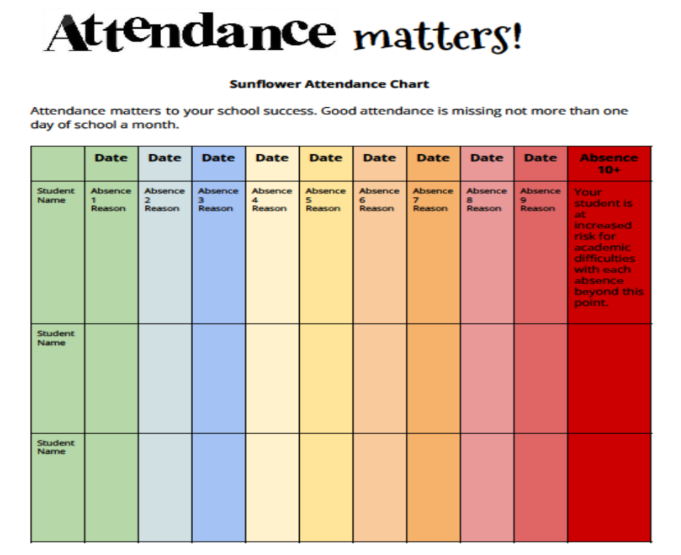
- Attendance Chart
This training was supported by the Health Resources and Services Administration (HRSA) through the Telehealth Technology‐Enabled Learning Program (Grant #U3I43512) of the U.S. Department of Health and Human Services (HHS) as part of an award totaling $475,000 with 100% of project costs financed with federal funds. The contents are those of the author(s) and do not necessarily represent the official views of, nor an endorsement by, HRSA, HHS, or the U.S. Government.
-
Session 13 - Active Communities and Schools: Thinking Through Physical Activity Environments
About the Session:
This session focuses on defining and redefining physical activity and presenting the state of the research field alongside community best practices. It focuses on the school as a central locus for an active community and shares strategies at different levels of engagement that can allow admins, teachers, students, and families to promote healthier lifestyles for their community members. This ECHO-like session encourages active engagement using case-based learning and discussion, creating a collaborative co-learning experience.
Presenter:
Jacob Carson, PhD, MPH, Postdoctoral Research Fellow, Center for Children’s Healthy Lifestyles and Nutrition, Children's Mercy
Session Materials:
Learning Objectives:
- Define the different types of physical activity
- Describe the benefits of physical activity to the classroom environment
- Identify in-classroom strategies for physical activity promotion
- Describe the facilitators and barriers to active lifestyles in schools and communities more broadly
Resources:
- Benefits of School-Based Physical Activity
- Active Kids Learn Better Education Brief
- Move Your Way
- What counts as physical activity for children and adolescents
- GoNoodle
- Daily Physical Activity (DPA) toolkit
This training was supported by the Health Resources and Services Administration (HRSA) through the Technology‐Enabled Collaborative Learning Program (Grant #UU754332) of the U.S. Department of Health and Human Services (HHS) as part of an award totaling $475,000 with 100% of project costs financed with federal funds. The contents are those of the author(s) and do not necessarily represent the official views of, nor an endorsement by, HRSA, HHS, or the U.S. Government.
Sessions 1-12 of this training series were supported by the Health Resources and Services Administration (HRSA) through the Telehealth Technology‐Enabled Learning Program (Grant #U3I43512) of the U.S. Department of Health and Human Services (HHS) as part of an award totaling $475,000 with 100% of project costs financed with federal funds. Session 13 of this series and on are supported by the Health Resources and Services Administration (HRSA) through the Technology‐Enabled Collaborative Learning Program (Grant #UU754332) of the U.S. Department of Health and Human Services (HHS) as part of an award totaling $475,000 with 100% of project costs financed with federal funds. The contents are those of the author(s) and do not necessarily represent the official views of, nor an endorsement by, HRSA, HHS, or the U.S. Government.